Overview
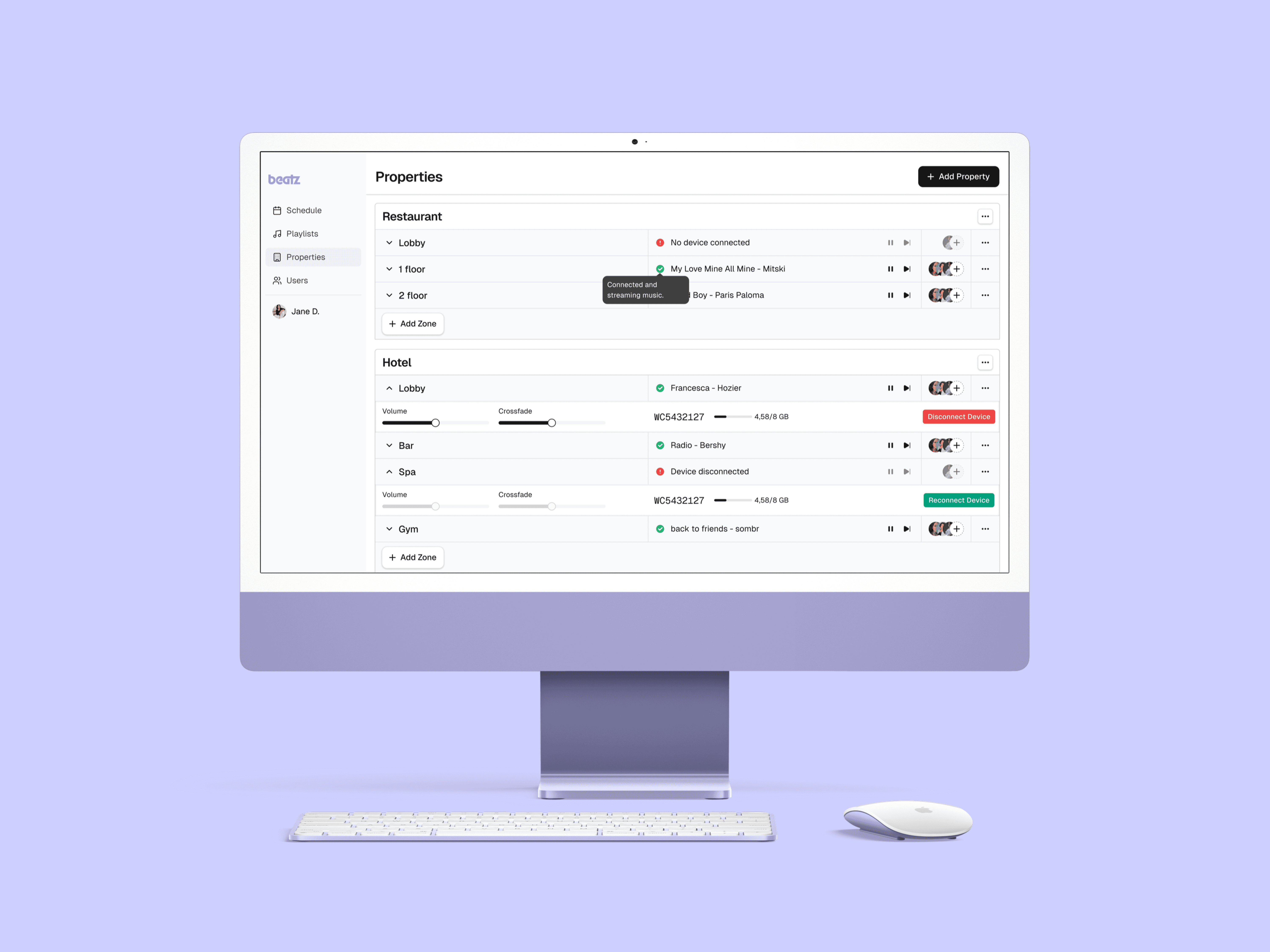
This project focuses on designing a web platform that helps businesses manage background music across multiple spaces. The application allows venues to create playlists, schedule them for different areas, and control music playback through connected devices.
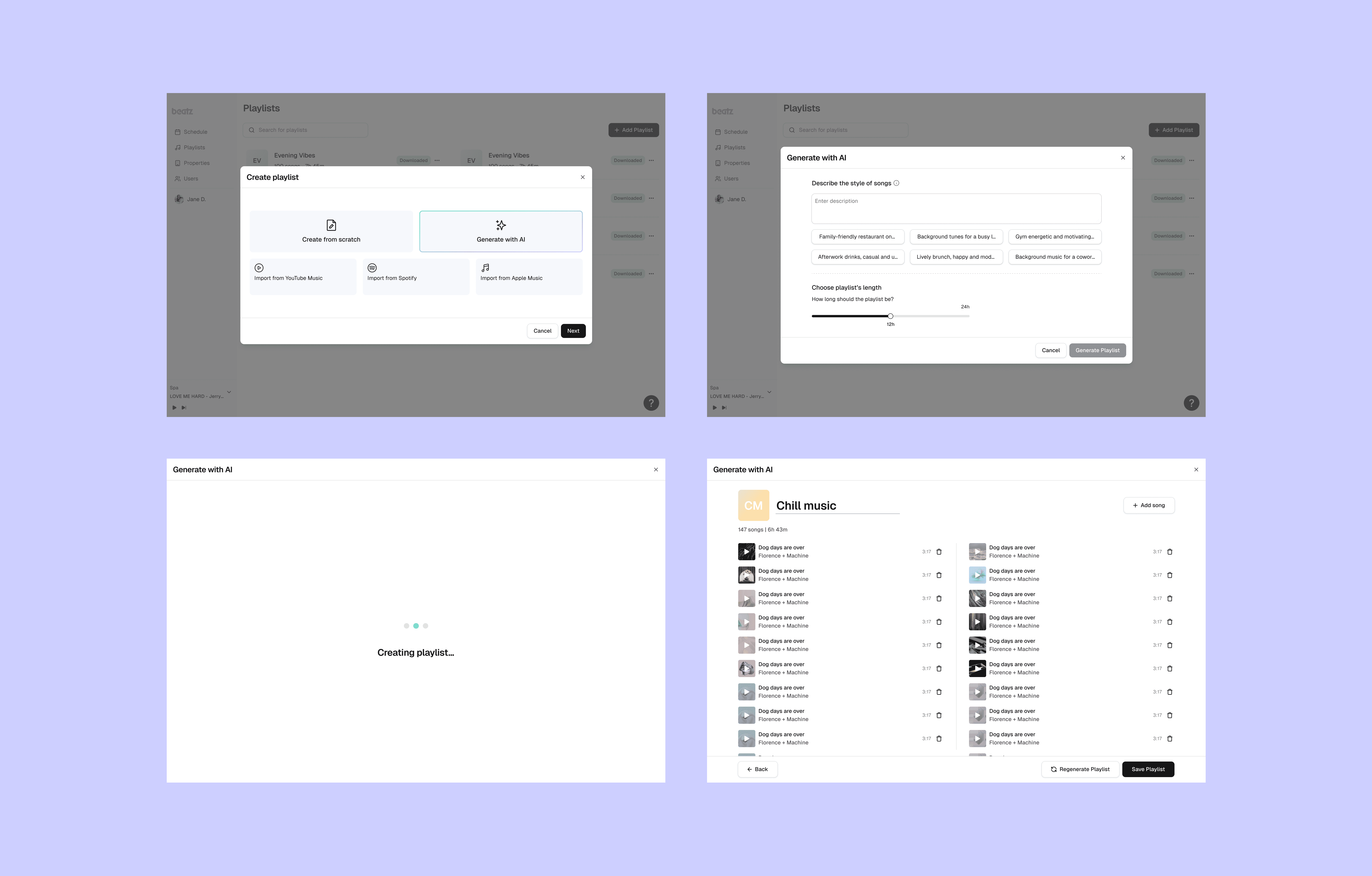
The goal was to simplify music management for businesses such as restaurants, hotels, gyms, cafés, and retail stores while providing automation through AI-generated playlists.
The Problem
Many venues play music to create atmosphere, but managing it across multiple spaces is often chaotic. Common problems include:
Staff manually switching playlists throughout the day
Different areas requiring different moods (lobby vs. bar vs. spa)
Lack of centralized control for multiple devices
Time-consuming playlist creation
No easy way to coordinate music schedules
Existing solutions often focus only on music streaming rather than music orchestration across a venue.The challenge was to design a system that allows businesses to:
manage music across multiple spaces
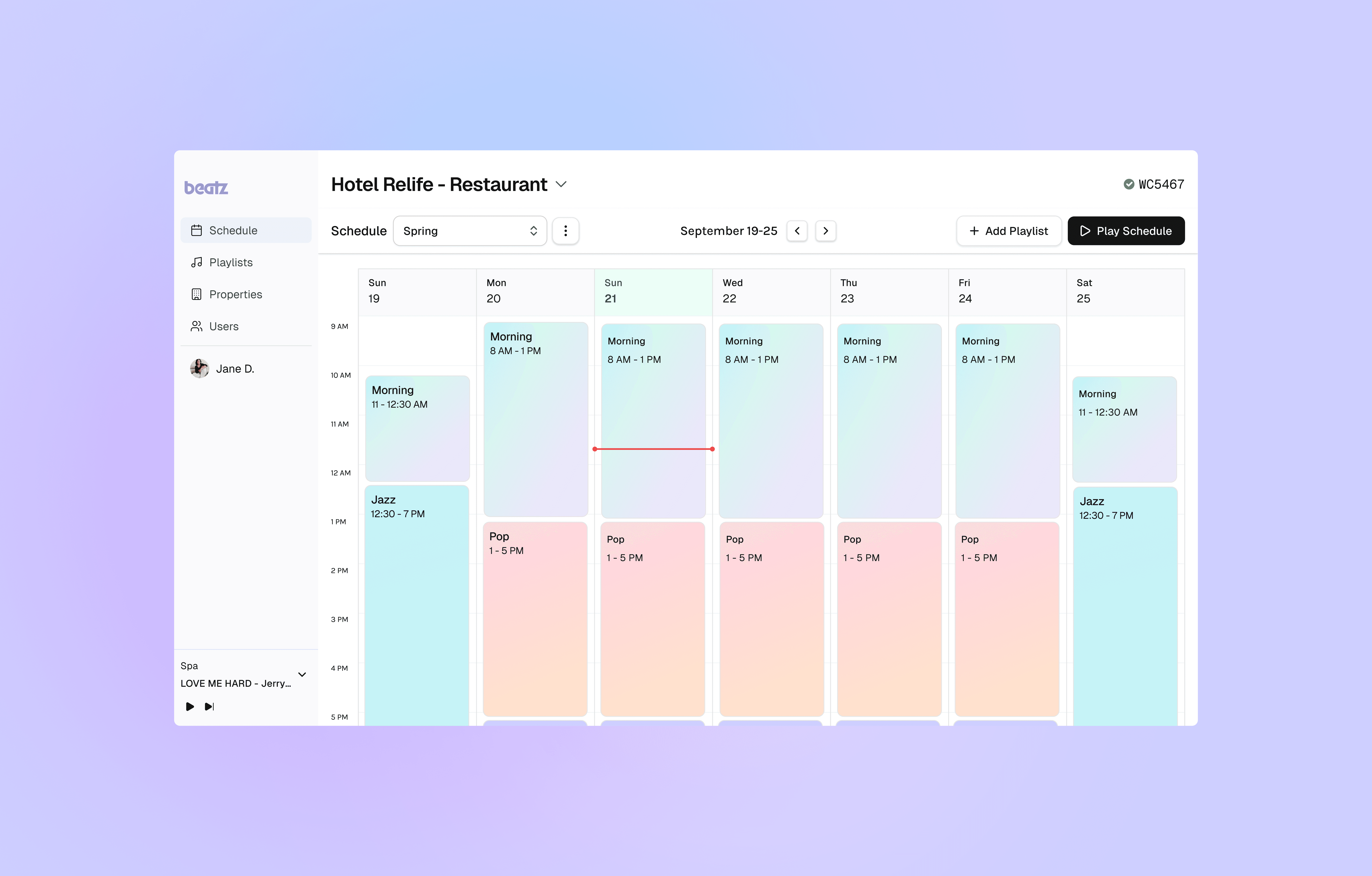
automate scheduling
generate playlists quickly
control playback from one interface.
Design Process
1. Existing Interface Analysis
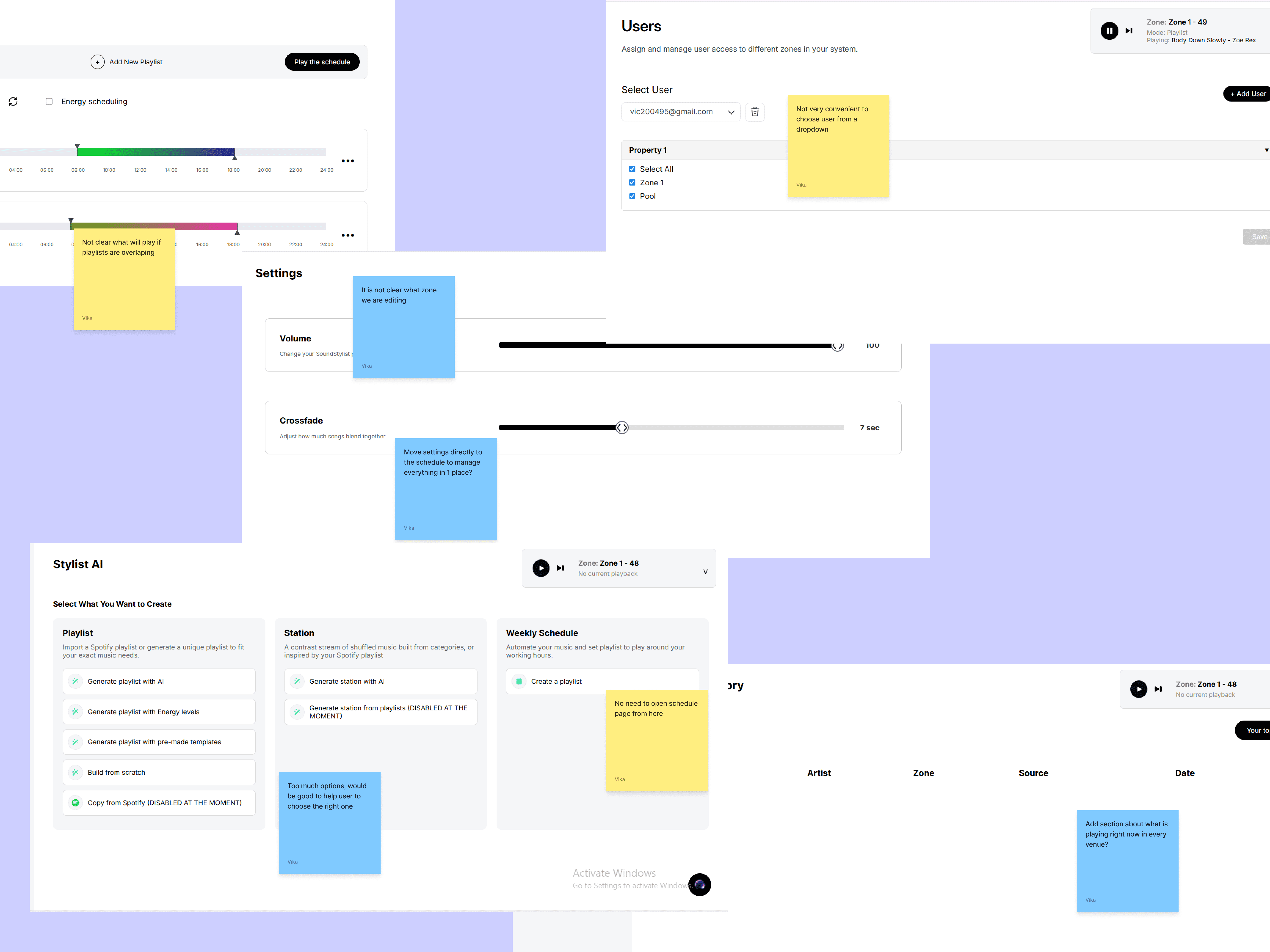
The first step was evaluating the current product interface to identify usability issues.
Key findings:
unclear hierarchy between properties, zones, and schedules
overloaded screens
inconsistent interaction patterns
difficult playlist scheduling flow.
This analysis helped define areas where the experience could be simplified.
2. Competitor Research
Several music and venue-management platforms were analyzed to understand industry patterns.
The research focused on:
playlist management
music scheduling
multi-location control
device management.
The goal was not to replicate existing solutions but to identify opportunities for improvement.
3. Wireframing and Concepting
After defining the structure, low-fidelity wireframes were created to explore the main workflows. The wireframes focused on:
playlist creation
schedule management
zone control
staff permissions.
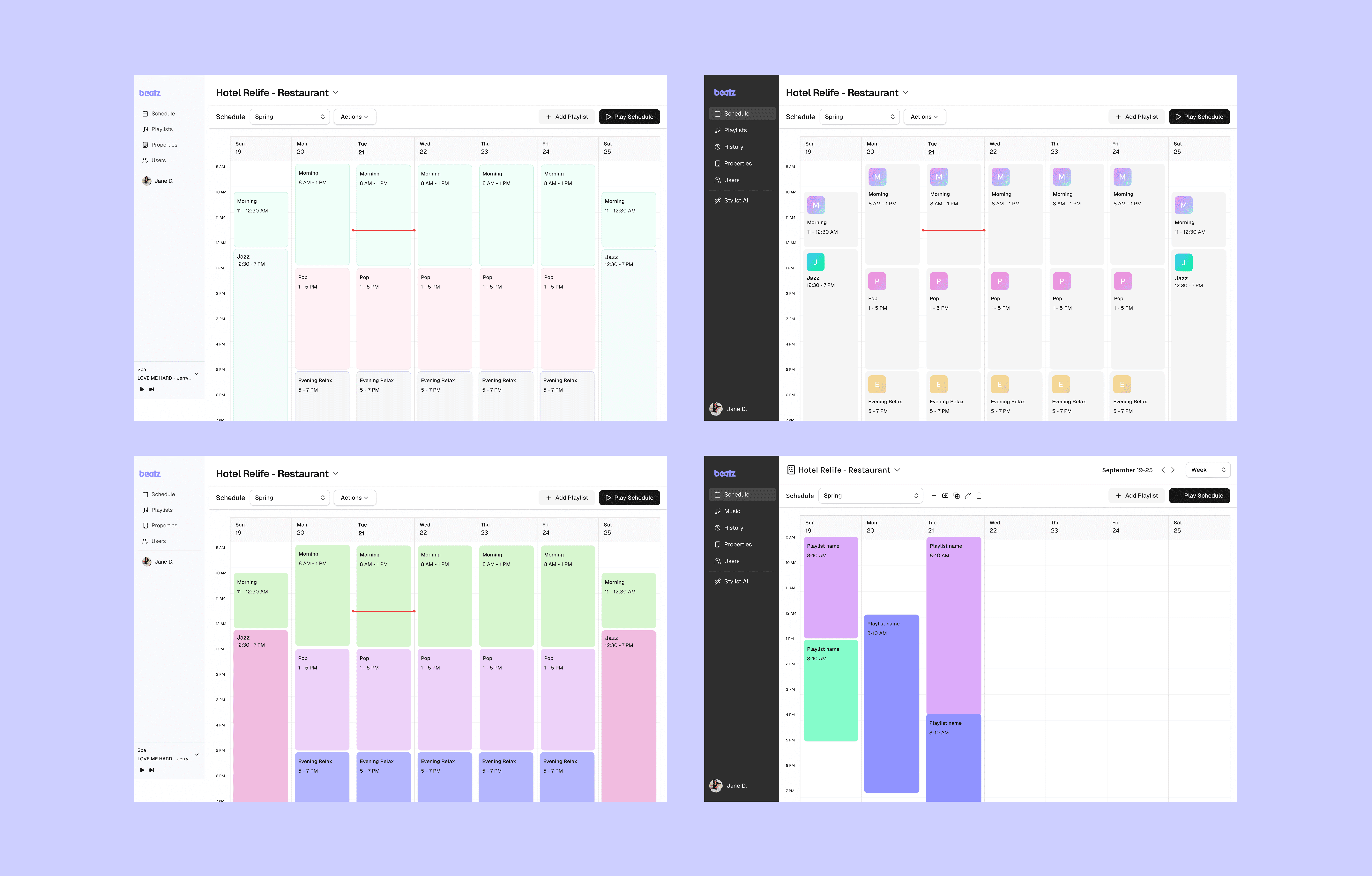
This phase helped validate layout decisions before moving into visual design. The concepts were developed right after the wireframes to decide on the visual style with a client.
4. UI Design
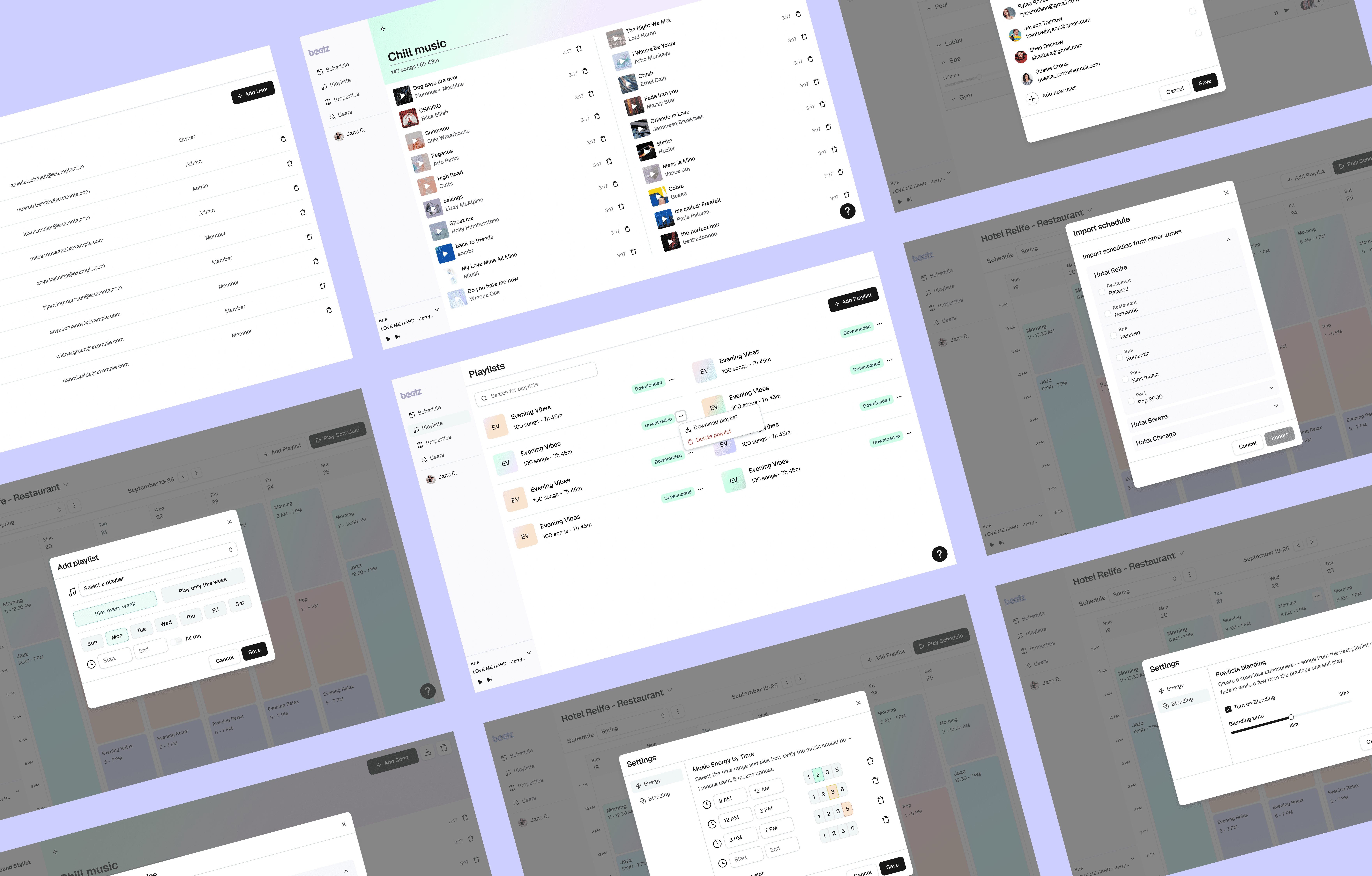
Once the core flows were validated, high-fidelity UI designs were developed.
The UI focused on:
clear hierarchy between properties, zones, playlists, and schedules
minimalistic tables for zone management
contextual controls (hover states, tooltips)
interactive onboarding and guided tours.
Special attention was given to making complex actions feel simple, especially for non-technical users managing venue music.